

En passant is 1 of those special chess rules of which can surprise the particular less experienced players. Make sure an individual know everything about this rule, therefore you don't acquire caught off guard!
Very best En Passant Rule?
The durante passant rule is actually a special pawn recording move in chess. "En passant" is a French manifestation that means "in passing", which can be exactly how this capture works.
Pawns usually can capture only bits that are immediately and diagonally within front of these people on an adjacent file. It moves to be able to the captured piece's square and changes it.
With sobre passant, though, everything is a little distinct. This kind of capture is usually the only one inside chess where taking piece doesn't property on the same square as its victim.
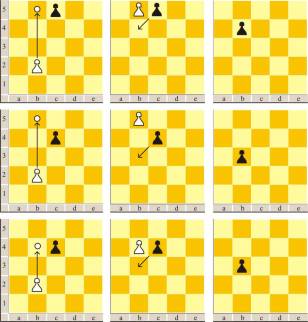
To execute this capture, you have to consider your opponent's pawn as if that had moved merely one square. You move your pawn diagonally to an adjacent square, one rank farther from where it experienced been, on the particular same file in which the enemy's pawn is, and eliminate the opponent's pawn in the board.
There are usually en passant chess move for the transfer to be legitimate:
The capturing pawn must have advanced exactly three rates to perform this specific move.
The grabbed pawn must possess moved two pieces in one transfer, landing right alongside the capturing pawn.
The en passant capture must become performed on the turn immediately after the particular pawn being taken moves. If the particular player does not necessarily capture en passant in that turn, these people no longer can do it later.
This kind of capture are unable to happen when the acquiring pawn has recently advanced four or maybe more pieces. Another instance exactly where this capture is definitely not allowed is when the opponent pawn lands correct next to your pawn but only following making two moves.
The notation regarding an beiläufig capture is the exact same as any other pawn capture. Note, though, that you have to jot down the pillow where pawn has landed, not the one where the grabbed pawn was.
History Of En Passant
The en passant move is tightly related to one other rule that was created centuries back for making chess more interesting. In the olden times, pawns may move only one pillow at a period. To make games more quickly, people modified pawn moves: they could now jump two squares when leaving their home squares.
When the pawn moves changed, even so, the dynamics regarding the game furthermore changed. A approved pawn is a great benefit for the gamer who has it. But since a pawn could now shift two squares upon its first shift, it was simpler to create a handed down pawn.
The sobre passant rule seemed to be then designed to avoid such a major change in the particular dynamics of the game. This rule prevented players by being able in order to create passed pawns by merely bouncing to the side of an enemy pawn, making chess more thrilling to play.